In Brushstrokes, the River Speaks: A Silent Protest by the Turag
Bangladesh—a land born of rivers, where the heart of its history, culture, and civilization flows alongside its many waterways. Here, rivers are more than just natural features; they are the invisible lifelines that have shaped entire communities, nourished creativity, and carried stories across generations.
But over time, we have grown distant from these life-giving rivers.
Today, rivers are no longer sources of vitality—they stand as tragic symbols of pollution, encroachment, and ecological exhaustion.
Once fierce and free-flowing, these rivers are now silenced.
Silted, strangled by illegal occupation, and poisoned by industrial waste, they are disappearing before our eyes—slowly, silently.
A river is no longer a pulse of life—it is a fading memory.
This reality cannot be contained within administrative policy alone.
What we need is conscious creative expression—art that gives voice to the pain of rivers and the stories of life entwined with them.
Rivers and Life Through Brushstrokes — An Artistic Protest
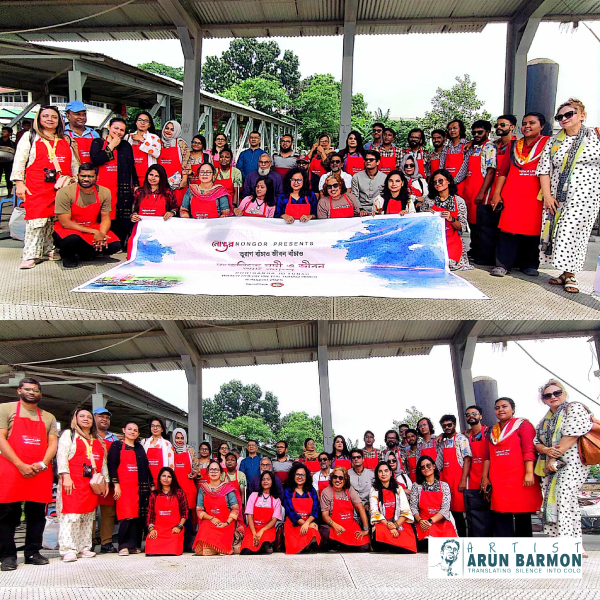
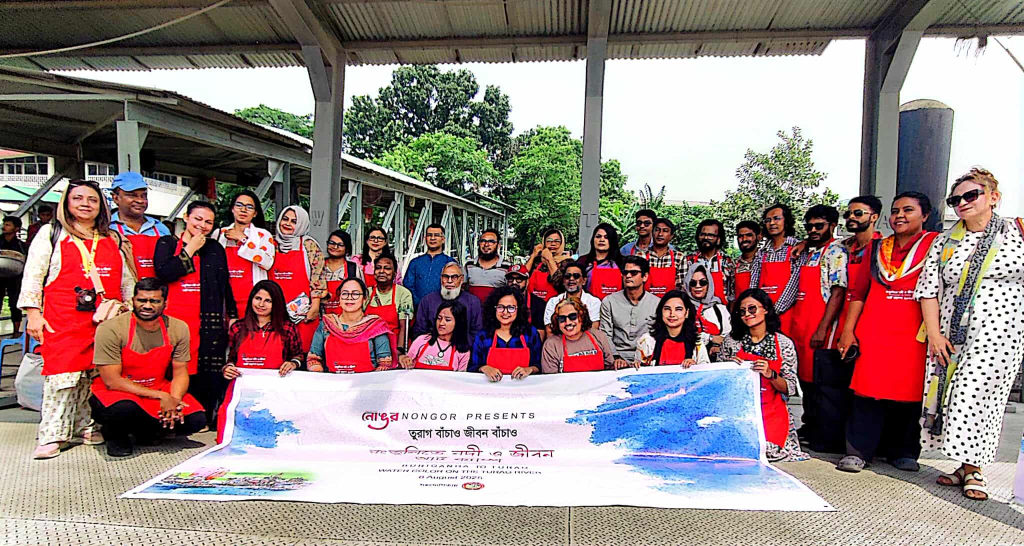
On Wednesday, August 6, 2025, a full-day art camp was held titled:
“Rong-Tulite Nodi O Jibon | Rivers and Life Through Brushstrokes.”
This year’s focus was the Turag River—once a vibrant waterway near Dhaka, now reduced to a shadow of its former self.
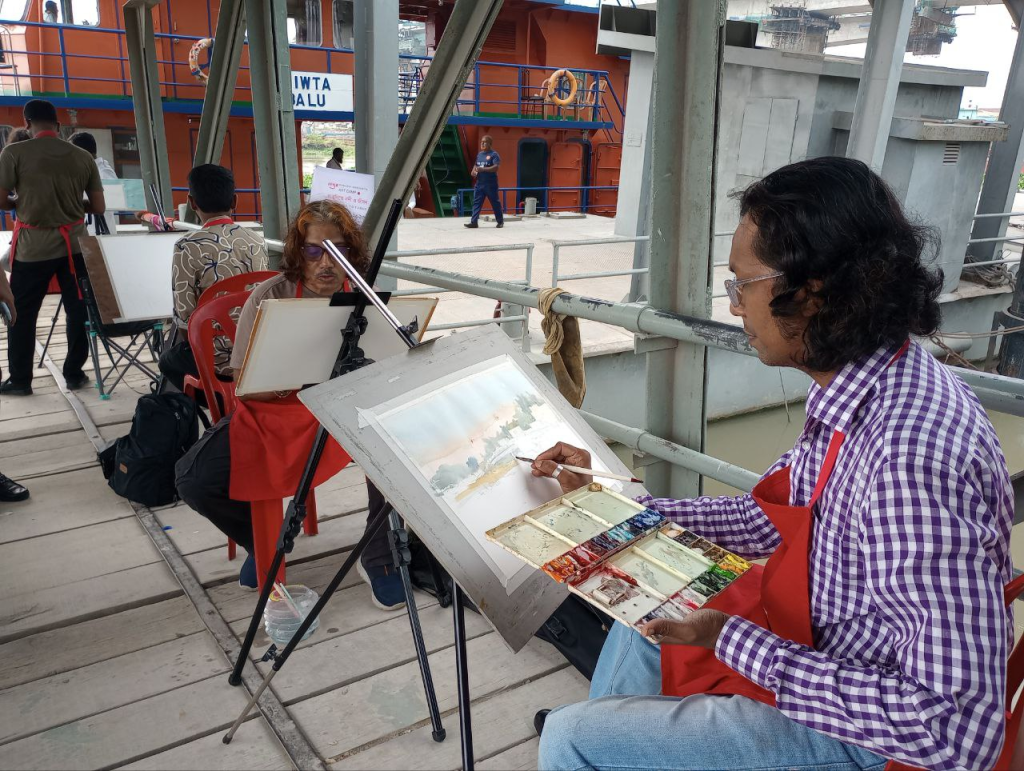
Artists gathered on the riverbank to face the truth head-on, capturing with watercolors the deep, unbreakable connection between river and life.
This was not merely a painting session—
it was a visual protest, a silent yet urgent plea:
“Save the river—because the river is life.”
🌊 Why the Turag?
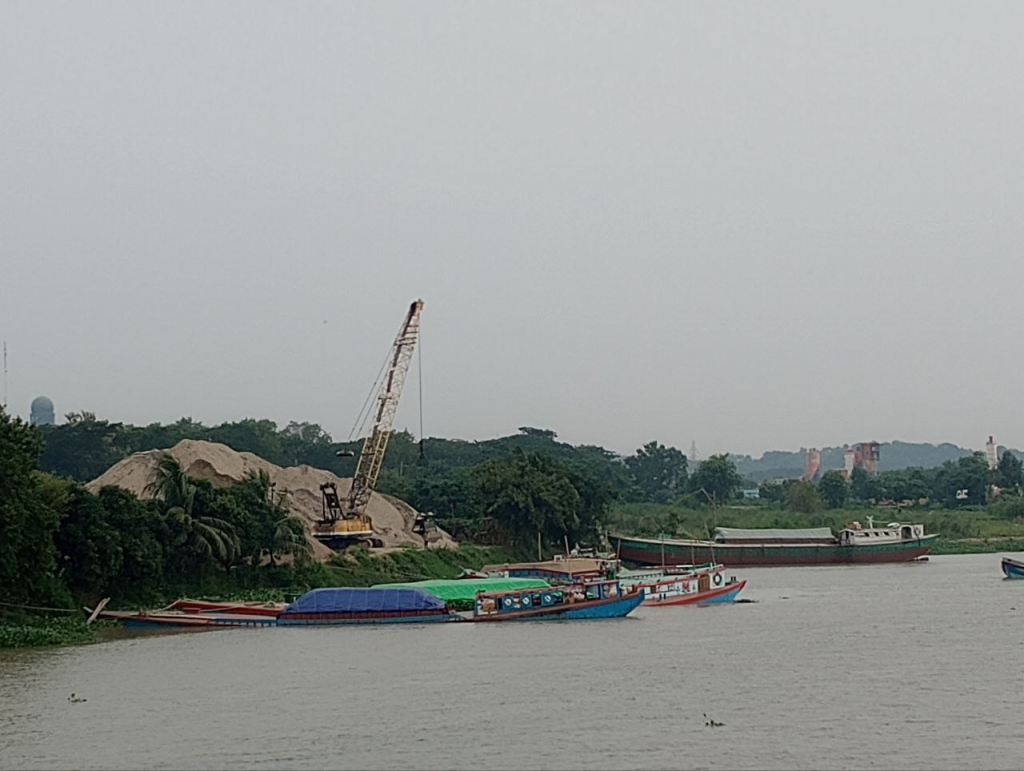
The Turag River was once the beating heart of northern Dhaka.
It supported transportation, agriculture, and daily livelihoods.
Today, it is clogged with silt, poisoned by toxic discharge, and choked by rampant encroachment.
This harsh transformation has left a lasting impact on the hearts of artists—
and that’s why Turag became the canvas of protest and reflection.
🖌️ Raising Awareness Through the Language of Art
Through every stroke of watercolor, the participating artists gave form to:
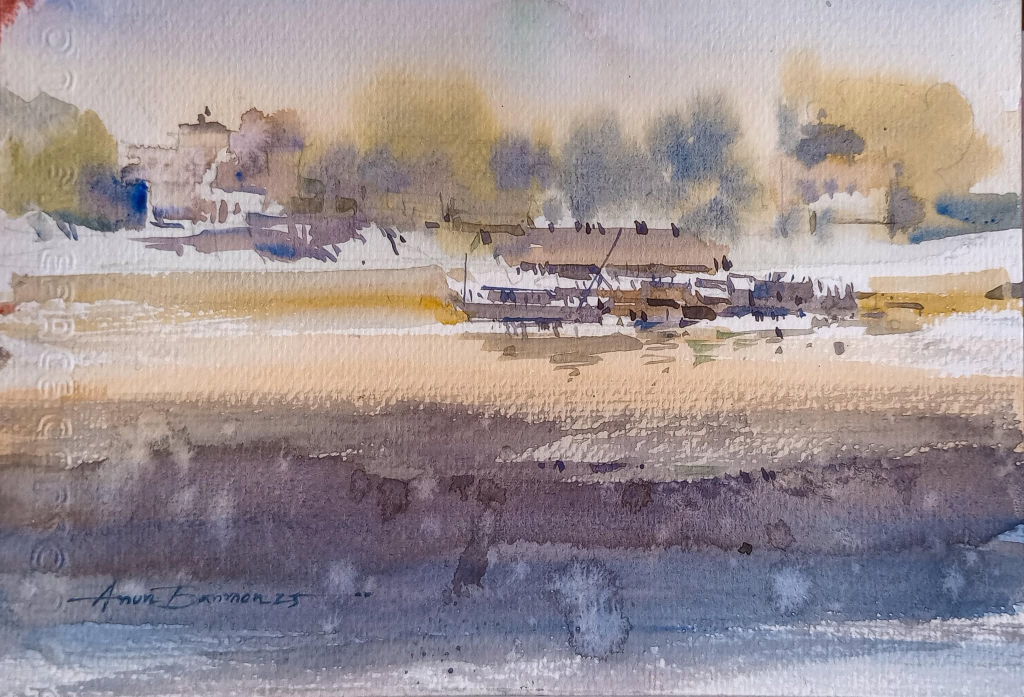
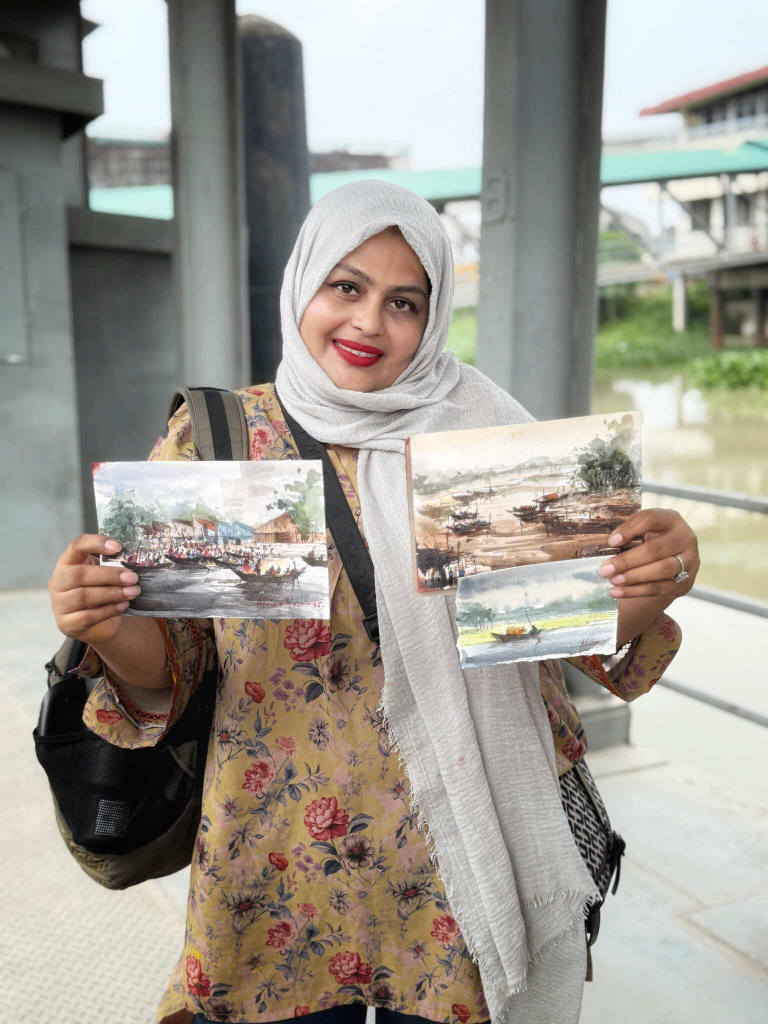
- The river’s past and present,
- The grief of its slow disappearance,
- And the dream of its revival.
This is more than art—
it is a social responsibility, a human appeal.
📢 Can Art Save a River?
Perhaps art alone cannot restore a dying river.
But art can ignite awareness.
It can raise questions.
It can spark movement.
And that’s where change begins—
with moments like these.
📍 Full coverage of this art camp—including photos, stories, and videos—will soon be published on our website and social platforms.
👉 Stay tuned, get involved, and be part of the message at
www.artistarunbarmon.com
Today, along the banks of the Turag, brushstrokes spoke.
They spoke of loss, of hope, and of a deep love for the river—expressed in the timeless language of art.